
DRONES AND THE DEVIL’S DOCTRINE
THE BUNKER LEADERSHIP OF THE WEST AND WHY WE ARE NOT (YET) WILLING TO LEARN FROM UKRAINE

I vividly recall the first drone we handed over in Ukraine. It was early January 2015, not far from Kharkiv. We must have looked a somewhat ragged assembly, yet we stood with quiet pride, posing beside the Phantom 2 we had procured in Lithuania and were now delivering to a volunteer unit in the field.
At the time, I confess, I did not fully grasp the significance of what we were doing. Yet I was seized by a curious sensation—that we were reenacting something already written in the annals of war. A kind of World War I déjà vu. I found my mind wandering to those rudimentary biplanes—the Sopwith Camel foremost among them—tentative at first, yet destined, slowly and inexorably, to claim their place in the machinery of war.
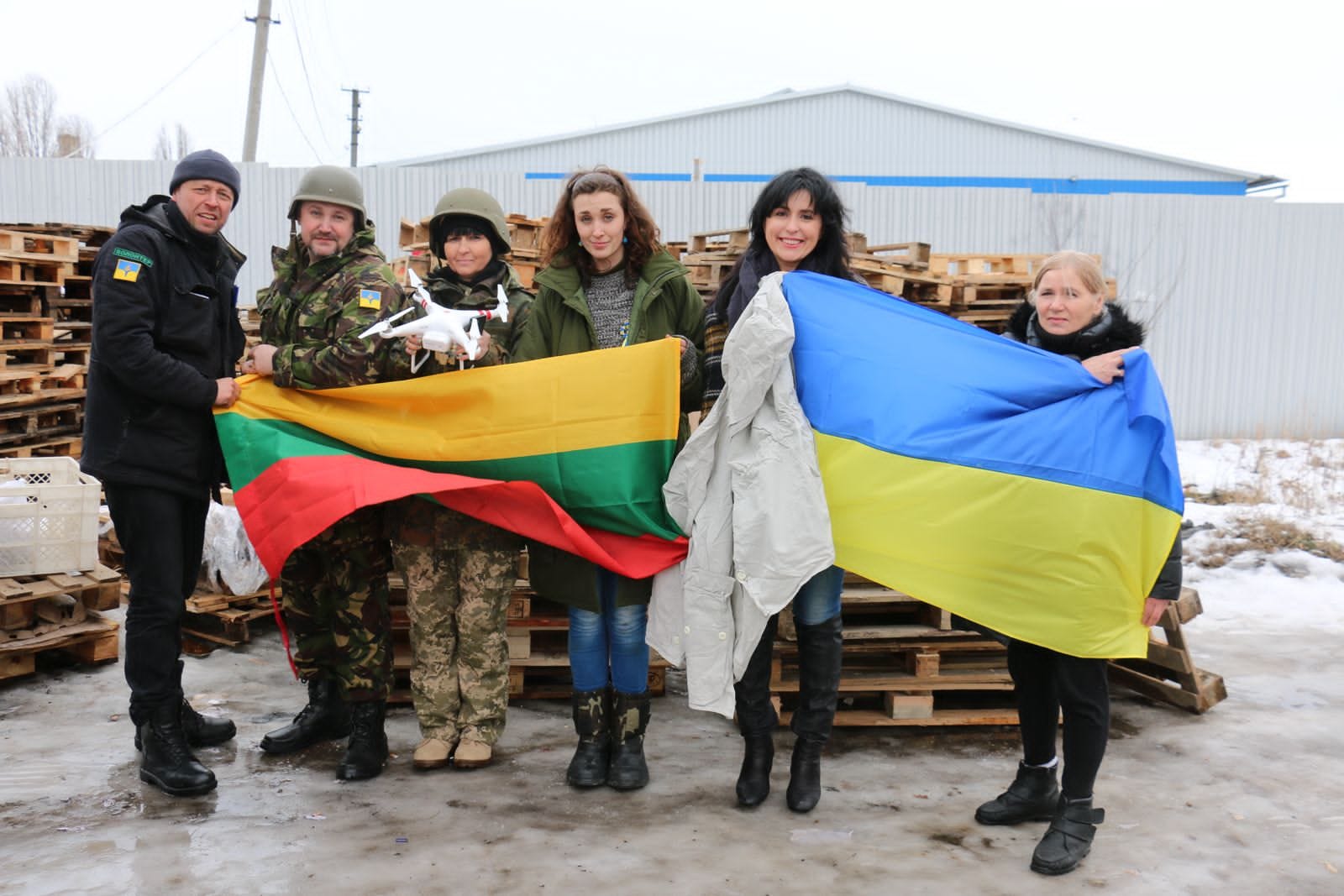
Jonas Oehman with his team, handing over the first drone in Ukraine, January 2015
Over the next seven years in Ukraine—up to the full-scale Russian invasion—I witnessed how the Ukrainians honed their mastery of drones. I remember the first grenade drops upon utterly unprepared “separatists” near Avdiivka. Later, seasoned Ukrainian fighters told me, with a certain irony, that much of the initial inspiration for these tactics came from an unlikely and grim source—ISIS. It was they, brutal and unrestrained, who first demonstrated the use of drones for dropping ordnance. Some Ukrainians, having seen the footage, concluded simply: what is possible, can be used.
I saw, too, how society at large began to stir—people with no formal ties to the military or defence establishments stepping forward. Among them were RC drone pilots, racing nimble machines along tight, twisting tracks, not unlike scenes from a Star Wars film. At some point, the thought arose—inevitably—what if such machines were armed and sent in only one direction?
In time, a domestic drone industry emerged, producing ever more sophisticated systems for reconnaissance, fire correction, and direct strike. One example remains vivid in my mind—the Leleka (“Stork”) drone, designed for deep reconnaissance. I recall working with a unit near Shyrokyne that slipped behind enemy lines by first veering out over the Azov Sea, only to return unseen across land.
Gradually, the realisation dawned upon me that what I was witnessing would change war itself. These systems were not merely ingenious, user-friendly, and effective. They possessed another, more decisive quality—one that has since been proven beyond doubt in the full-scale war, where vast Russian resources have been destroyed at minimal cost: they were cheap.
Between my visits to Ukraine, I sought to carry this message to those entrusted with our defence—political leaders and military authorities alike. I tried to impress upon them that war was changing, and that we must change with it, and swiftly. Too often, I was met with what might politely be called indifference. I recall, in particular, a visit to NATO headquarters in Brussels. As we departed, one of the staff escorting us remarked, with disarming candour: “We appreciate what you are doing—but the brass here do not care about drones. They believe the systems we have will outmatch them every time.”
The war ground on—and so did we. During the winter months, we did what little we could to support Ukraine’s air defences against what seemed an ever-growing swarm of Shaheed drones. It was not enough—but it was something. I carry, with quiet pride, one of my most recent medals—for our support to the air defence of Kyiv during that winter.
And then came Iran—or rather, the accumulated lessons of Ukraine, now impossible to ignore, struck home. I look upon the hurried efforts to adapt, the scrambling against time, and I cannot escape that earlier sense of déjà vu. For history has shown us this before.
In the First World War, there emerged what might be called bunker leadership: commanders ensconced in fortified shelters, conducting their calculations far from the mud and terror of the trenches. Elegant in theory—catastrophic in practice.
Today, I fear we have constructed our own “decision-making bunkers”—well insulated, meticulously organised, yet governed by a logic detached from the realities they seek to command. A machinery of security policy ill-suited to foresee, let alone adapt to, the rapid transformations brought about by drones—despite years of mounting, and readily available, evidence (YouTube, if nothing else, bears witness). A system too vast to fail, and therefore too cautious to change—more inclined to preserve the status quo than to risk disruption. Why alter what appears, from a distance, to function?
The problem runs deeper still. In my efforts to engage, I have encountered senior military and political figures who confess, in private, their frustration at their own inability to effect change within the structures they serve.
Are we willing to re-examine how we understand and shape the security challenges of today—and tomorrow? I fear not. Not until the cost becomes undeniable. And that day may not be far off—particularly if we persist in treating the warfare of the future as a nuisance, rather than confronting it as a reality to be reckoned with.
This brings me to what I choose to call the Devil’s Doctrine. Whatever principles guide your policymaking, whatever decisions you take, you must build in mechanisms that question you—relentlessly—and, when needed, declare you mistaken.
For if you refuse to hear that voice, the Devil will supply the lesson himself—on the battlefield.
Anyone wishing to support Blue/Yellow and Ukraine can do so via the following links:
Facebook: www.facebook.com/blueyellowforukraine
Instagram: www.instagram.com/blueyellowforukraine/
Website: https://blue-yellow.lt/en/#contribute
Beneficiary: VšĮ Mėlyna ir geltona
IBAN: LT17 7300 0101 4089 4869
Bank: Swedbank, AB
Bank address: Konstitucijos av. 20A, 03502 Vilnius, Lithuania
SWIFT/BIC: HABALT22
Payment purpose: Donation